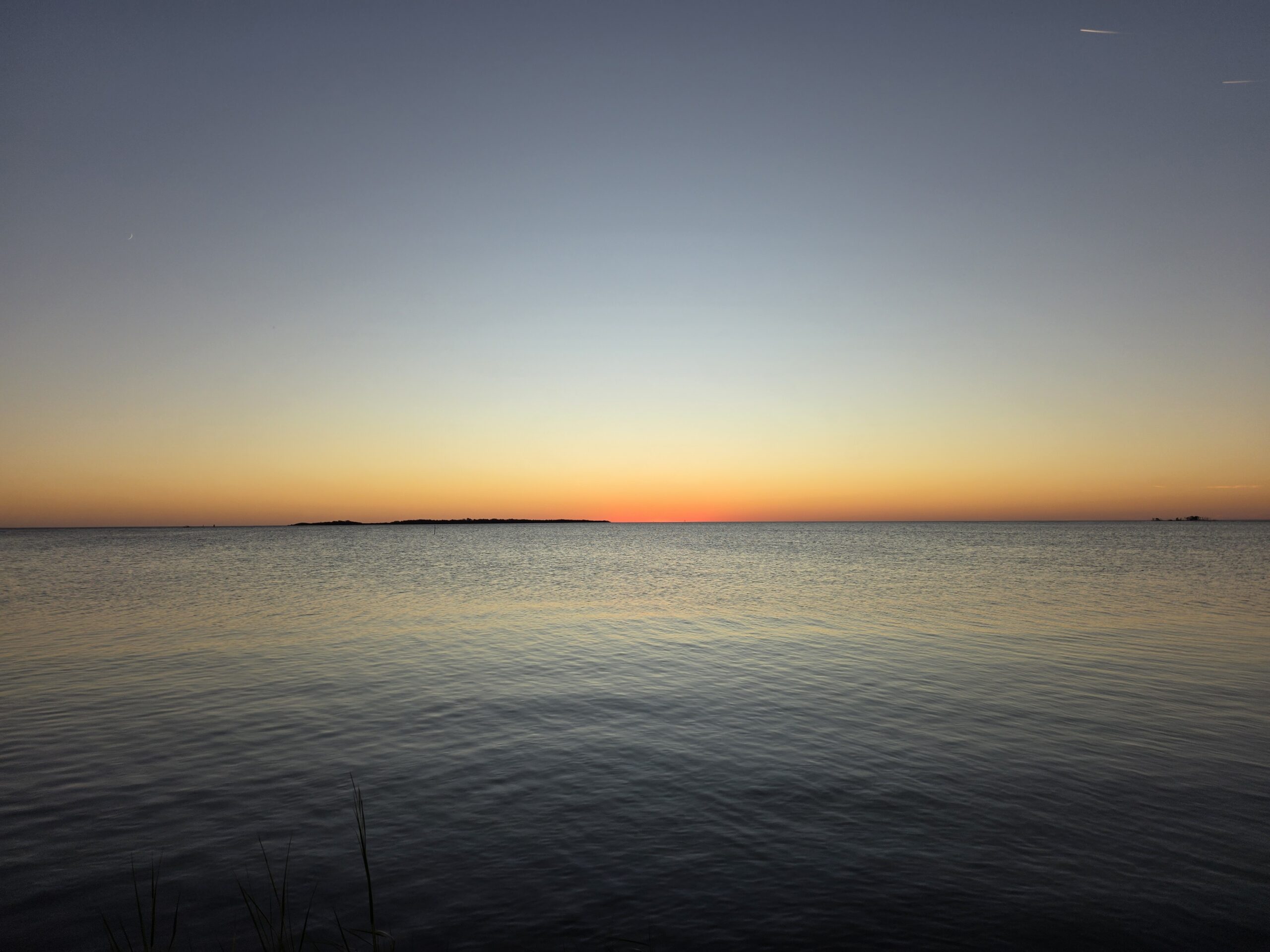
People drive to the end of State Road 24 expecting a quiet little island, and they find one. What surprises them is how much is packed into it: a town that was once one of Florida’s great Gulf ports, a ring of wild refuge islands, a working waterfront that feeds half the country’s clam habit, and a sky that puts on a show every single evening. Here’s how to spend your time — the way we’d tell a friend.
First thing to know: Cedar Key runs on island time and boat time. Hours change with seasons and storms, so check ahead — and build your day around the sunset, not the other way around.
Start with the story: Cedar Key Museum State Park
If you do one thing first, do this. The Cedar Key Museum State Park (12231 SW 166th Court) tells you what you’re looking at: a major 1800s Gulf port and railroad town, the pencil-cedar mills that made it rich, and the 1896 hurricane that ended that chapter overnight. The museum grew out of St. Clair Whitman’s own collection of shells and Native American artifacts, and his restored 1880s house — set up as it was in the 1920s — stands right on the grounds. Out back, a short nature trail leads to the marker for naturalist John Muir, who ended his famous Thousand-Mile Walk here in 1867 and got his first sight of the Gulf of Mexico. The grounds are free and open daily, 8 a.m. to sunset; the museum itself is $2 a person (kids 5 and under free), open Friday–Sunday, 10–5. Two dollars. Best bargain on the island.
There’s a second museum downtown, too — the Cedar Key Historical Society Museum at 609 2nd Street, two buildings of photographs, artifacts, and island memory kept by the folks whose families lived it. Well worth an hour; check their current hours before you go.
The wild ring: Cedar Keys National Wildlife Refuge
Cedar Key is ringed by 13 protected islands — the Cedar Keys National Wildlife Refuge, established in 1929 when plume hunters were wiping out the Gulf’s wading birds. You reach all of it by boat, and that’s the point.
- Seahorse Key is the crown jewel: a prehistoric dune ridge that’s the highest ground on Florida’s Gulf coast, topped by the Cedar Key Light Station — a lighthouse lit in 1854, before the Civil War. The island is closed March 1 through June 30 every year (with a buffer zone around it) so thousands of birds can nest in peace — including one of the most famous cottonmouth nurseries in nature writing — and the lighthouse opens to visitors only on scheduled open-house days, traditionally the third weekend of October during the Seafood Festival, with boat shuttles running from the Cedar Key marina. The University of Florida has run its marine lab on the island since 1952. If you’re here for an open house, go. There is nothing else like it on this coast.
- Atsena Otie Key, just across the harbor, is where Cedar Key itself began. Ride or paddle over and walk the trail to the ruins of the Faber pencil mill and the old cemetery under the cedars — the whole 19th-century town, gone quiet. There’s a dock, a kiosk, restrooms, and shade.
- Snake Key is a colonial bird rookery — herons, egrets, ibis, cormorants stacked into the mangroves. You view it from the water, which is close enough: at nesting season it sounds like a stadium.
Refuge office for questions: U.S. Fish & Wildlife Service, Lower Suwannee & Cedar Keys Refuges, (352) 493-0238.
Dock Street and the pier: the island’s living room
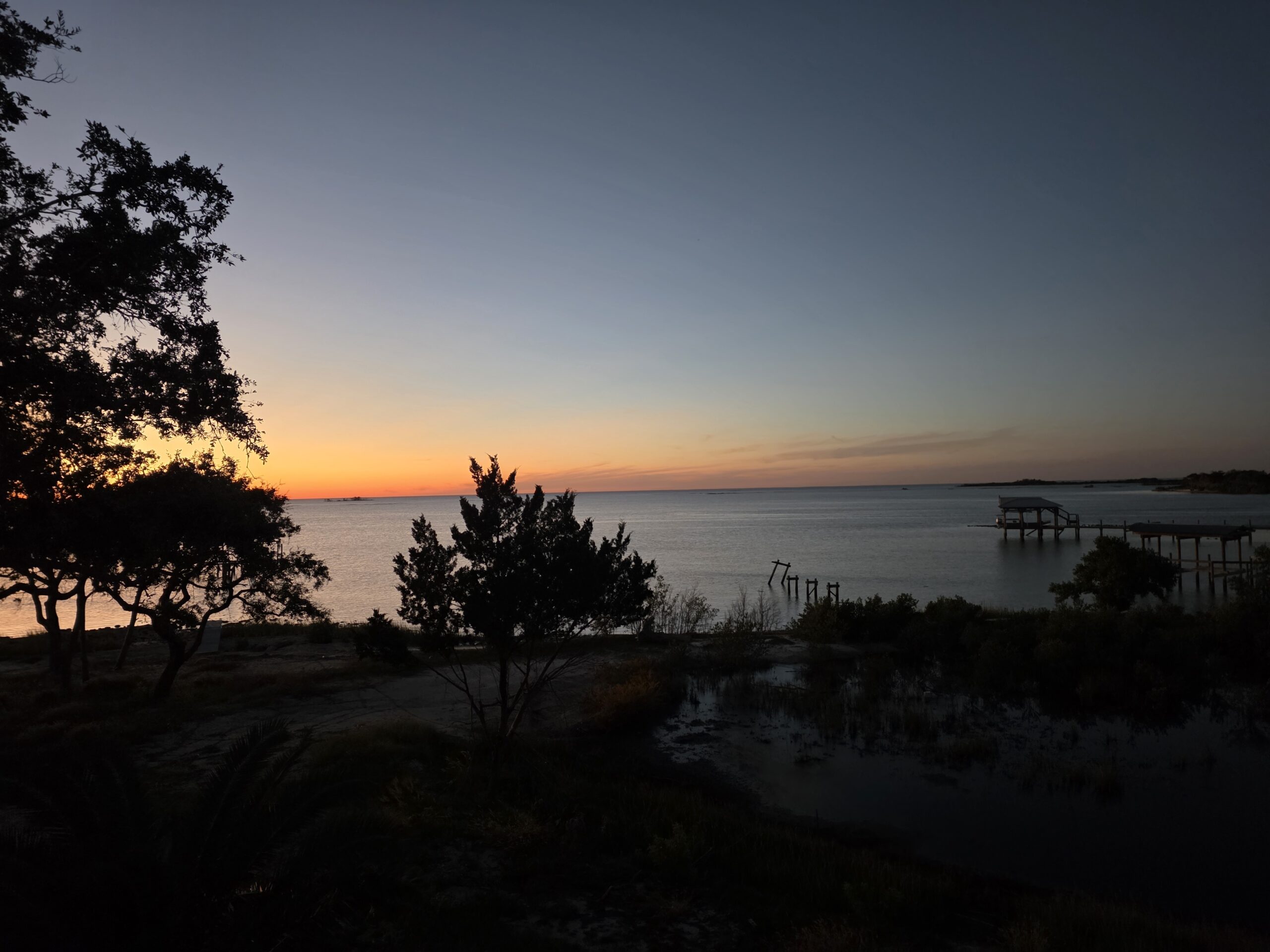
Everything in Cedar Key eventually washes up on Dock Street — the curve of stilted restaurants, bars, and shops hanging over the water where the clam boats and fishing charters tie up. Eat something that was swimming this morning. Watch the pelicans work the cleaning stations. Then walk it off to the municipal fishing pier and City Park beach, and time your evening for the main event: sunset over the Gulf, applauded nightly, no tickets required. There’s another pier at the No. 4 Bridge for fishing and sunset-watching on the way in or out of town.
On the water
The backcountry — the maze of marsh, oyster bars, and mangrove islands behind Cedar Key — is the real article, and the way in is a small boat.
- Boat tours & island drop-offs: local operators like Tidewater Tours run lighthouse shuttles, island drop-offs at Atsena Otie, and sunset and dolphin cruises. Other captains around the marina offer the same island knowledge with their own spin.
- Kayaks: rent one in town or take a guided paddle. The run to Atsena Otie is the classic; the back-marsh creeks at high tide are the local secret.
- Fishing: charter a guide for redfish, trout, and tripletail in the backcountry, or fish the piers. In season, folks come from three states away for scalloping trips out of the marina.
- Swimming & beach: City Park beach is the town beach — small, sandy, and sunset-facing. Lil Shark Park nearby has the playground and restrooms.
Clam country: dinner with a backstory
Order the clams. Seriously — Cedar Key is one of the top farm-raised clam producers in America, and the industry is the reason this town still exists. When Florida’s 1994 net ban ended generations of traditional fishing, Cedar Key’s watermen retrained, leased Gulf bottom, and built a clam-farming industry from nothing — now the rows of working clam boats along the waterfront are the town’s skyline and its pride. The Cedar Key Aquaculture Association keeps the story straight, and the raw bars on Dock Street serve them by the dozen. Eating a plate of Cedar Key littlenecks isn’t lunch; it’s the town’s autobiography, with hot sauce.
Trails and quiet corners
- Cemetery Point Park — a boardwalk out over the marsh beside the historic cemetery (established 1886). Herons, raking light, and the best quiet on the island.
- Cedar Key Railroad Trestle Nature Trail — an easy walk along the old rail bed that once tied the island to the mainland world.
- Cedar Key Scrub State Reserve — up SR-24 on the mainland side: miles of sand trails through old-Florida scrub, best for strong walkers and off-road cyclists.
- Shell Mound — about seven miles out in the Lower Suwannee National Wildlife Refuge: a roughly thousand-year-old shell midden built by the people who lived here long before the railroad, with a boardwalk, pier, and a big view of the Gulf marsh.
For the birders
Bring binoculars — more than 250 bird species have been documented on the refuge islands alone. Roseate spoonbills work the Atsena Otie flats, white pelicans raft up by the hundreds in winter, bald eagles and ospreys nest around the harbor, and the spring and fall migrations turn the whole archipelago into a rest stop. Cemetery Point at dawn and a boat ride past Snake Key at nesting season are the two experiences birders write home about.
Festival season: the year’s big dates
Cedar Key throws a party roughly every time the weather gives it an excuse. The anchors:
| When | What | Notes |
|---|---|---|
| Late Jan / early Feb | Stargazing Party | Cedar Key’s dark Gulf skies are the draw — volunteer astronomers, telescopes, and programs at the museum grounds and the Scrub. Dates shift each year; check ahead. |
| April 3–4, 2027 | Old Florida Celebration of the Arts | The big one for art lovers: 100 invited fine artists take over 2nd Street for a juried festival running since the 1960s and ranked among America’s best small-town art fairs. |
| July 4 | Independence Day | Fireworks over the Gulf, and a hometown celebration with the clam industry front and center. |
| Mid-August (2027 date TBA) | Cedar Key Shark Swim | Swimmers cross the channel from Atsena Otie back to the island — clam boats lining the course — to raise money for Cedar Key School. 2026’s fifth annual swim was August 15. |
| October (2027 date TBA) | Cedar Key Seafood Festival | The island’s biggest weekend: Lions Club-run, 100+ vendors on 2nd Street, a Saturday-morning parade, live music, and every fried, steamed, and raw thing the Gulf provides. 2026’s 55th annual ran Oct 17–18 — and the Seahorse Key lighthouse open house rides along with it. |
| Late Oct / early Nov | Cedar Key Pirate Invasion | Pirates take the town “with a purpose” — encampment in City Park, battles on the beach, and music on Dock Street. Yes, people dress up. Join them. |